INVI — wedding invitation SaaS
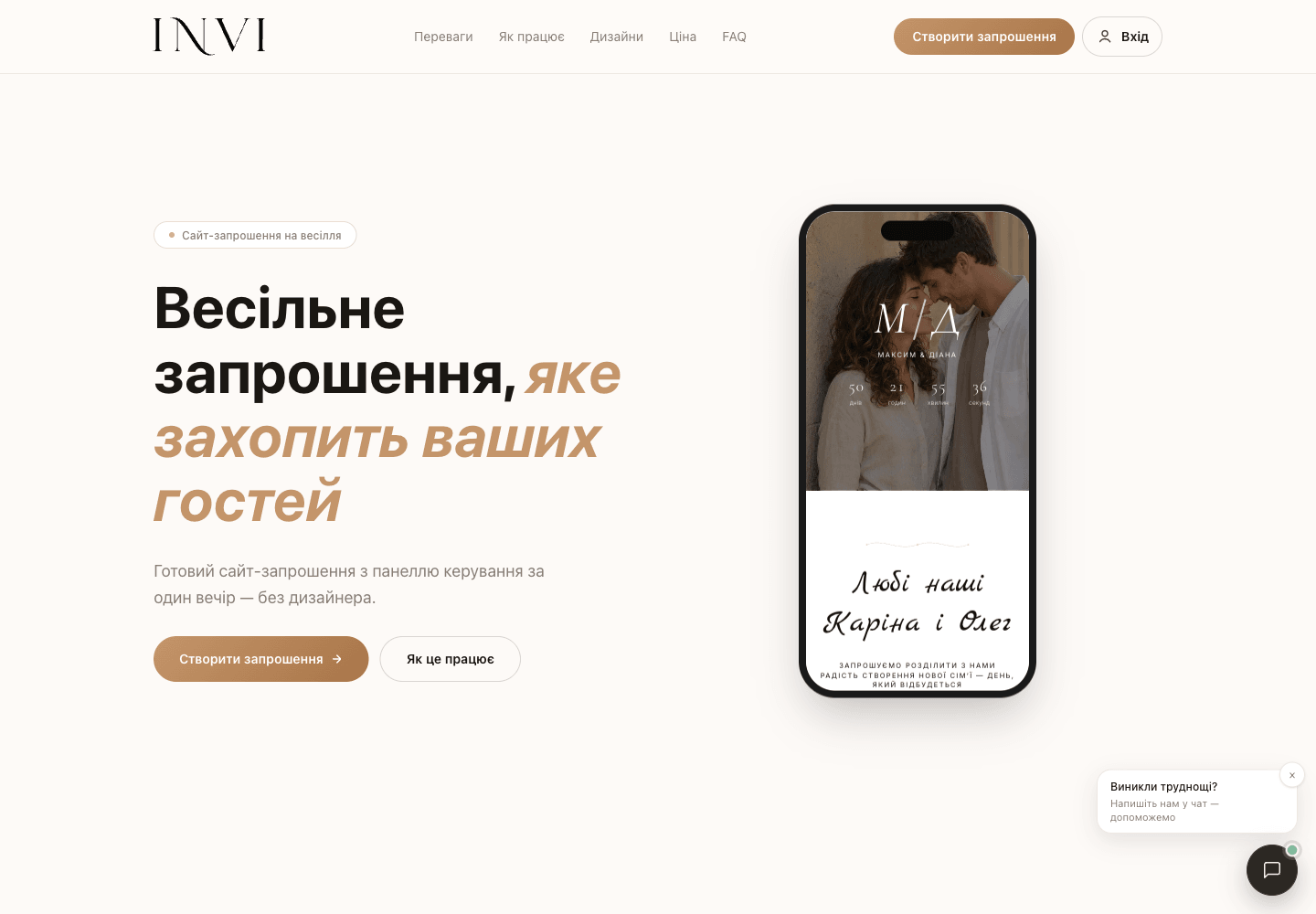
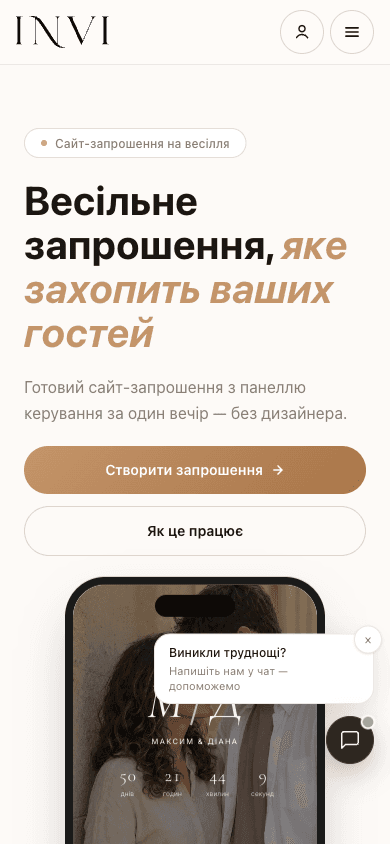
A production SaaS where couples assemble a personal invitation website in one evening: designs, a step-by-step wizard, guest list, and RSVP tracking — plus a platform admin for clients, billing, and operations.
Problem & goal
A custom wedding invitation site normally requires a designer and a developer. The goal was a SaaS where a couple picks a design, fills in their story through a guided wizard, sends personal links to guests, and tracks RSVPs in one cabinet — while the operator manages clients, tariffs, and payments from an admin panel.
My role & ownership
I built the product end to end: the landing page with SMS authentication, the 14-step invitation builder with live preview and state persistence, the couple's cabinet (guests, content editing, settings), public invitation pages served on personal guest URLs, a support chat, and the platform admin (clients, subscriptions, tariffs, payments, invitations, leads, audit log).
Product modules
Key engineering challenges
A 14-step wizard non-designers can finish
The builder persists state at every step, validates each content block, and shows a live preview of the final design — so a couple can assemble a polished invitation in one evening without ever losing progress.
Personal guest links and RSVP tracking
Every guest gets an individual URL. The cabinet tracks response status per guest and exports the list, so the couple always knows exactly who confirmed.
SMS OTP tied to the editing cabinet
Phone-based sign-in connects the couple to their invitation: after login they edit content, switch templates, and update links without losing guest data.
Technology stack
Frontend
- Next.js
- TypeScript
- Tailwind CSS
- React Hook Form
- Zod
Backend
- Node.js
- REST API
- JWT auth
- SMS OTP
Data
- PostgreSQL
- Prisma
Infrastructure
- Vercel
- SMS provider